Majlis Redesign – Al Suyoh
Residential
The Vision
This project involves the redesign of a majlis space within a private villa located in the Al Suyoh
district in the United Arab Emirates. The villa was already completed and fully occupied by the
family when the redesign request was initiated. The client’s primary objective was to enhance the
functionality, privacy, and overall aesthetic quality of the majlis while maintaining harmony with
the existing architecture of the house.
Upon analyzing the spatial layout, one of the main challenges became immediately apparent. The
original plan lacked a visual and spatial transition between the main entrance of the villa and the
majlis seating area. As a result, when the entrance door was opened, guests seated inside the
majlis had a direct visual connection with the exterior courtyard, which significantly reduced the
level of privacy within the space.
In residential environments rooted in Arab cultural traditions, privacy and respectful spatial
hierarchy are essential components of the architectural experience. Therefore, the redesign
strategy focused on addressing this issue while simultaneously elevating the interior character of
the majlis through carefully considered furniture arrangements and decorative elements.
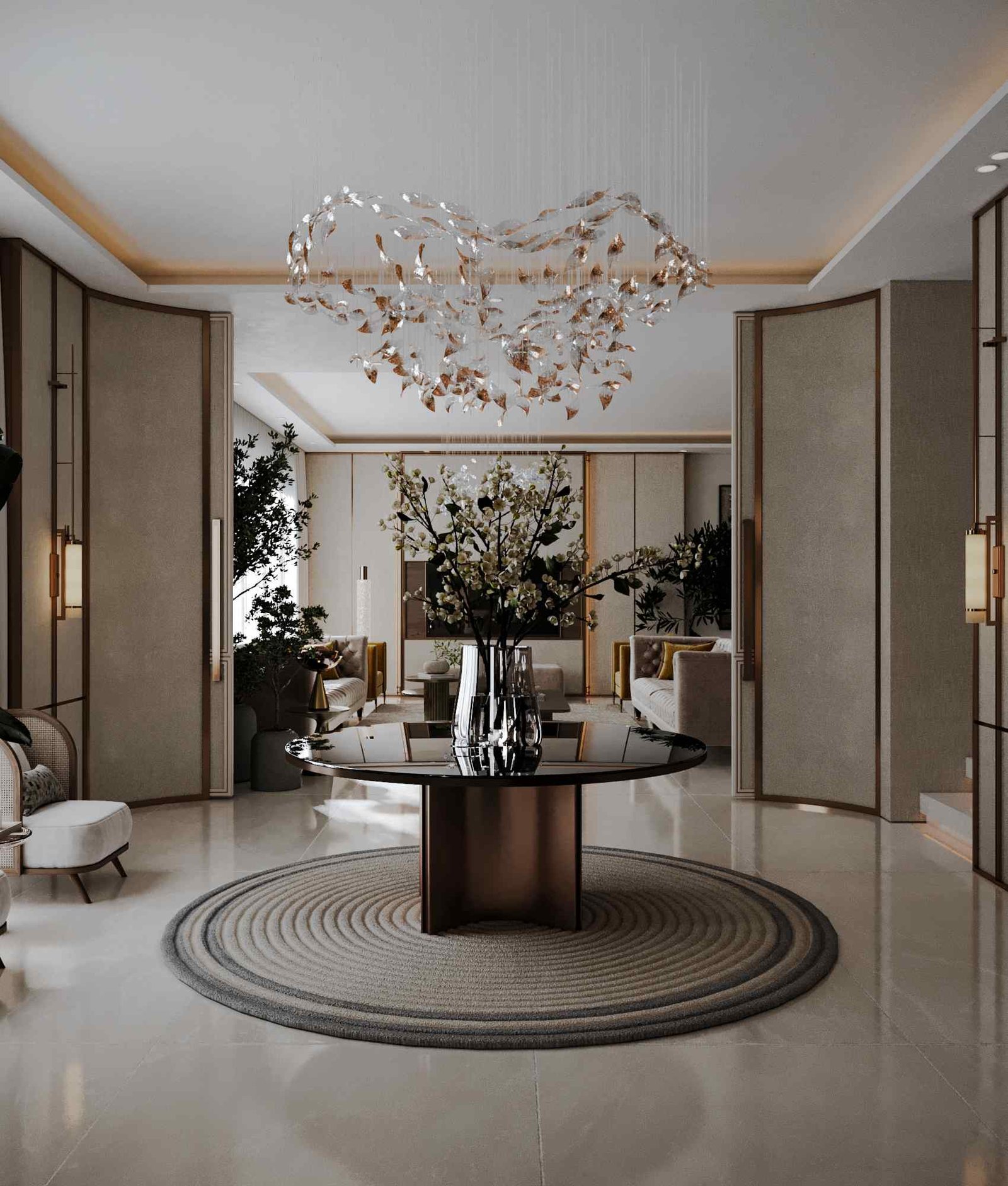
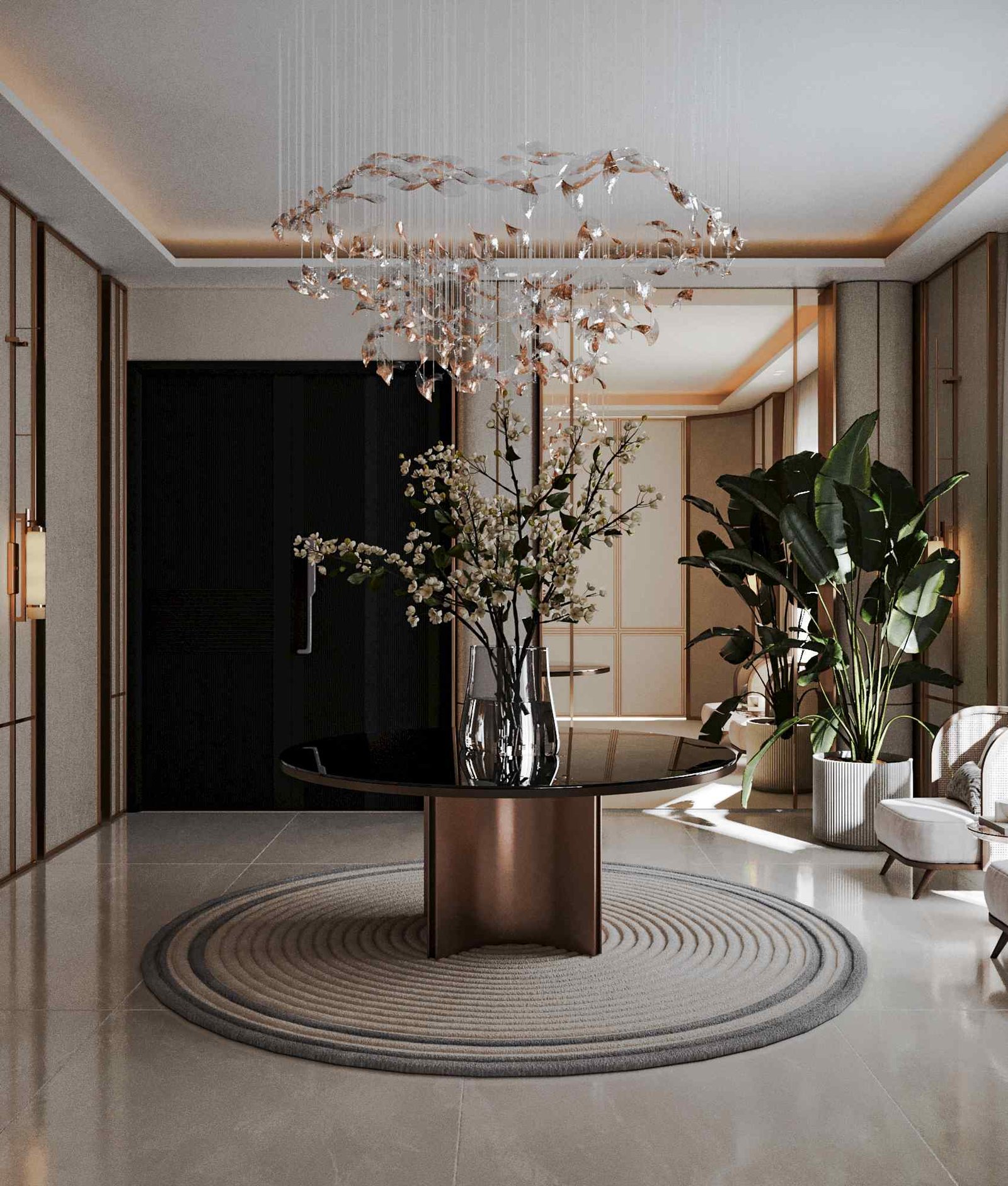
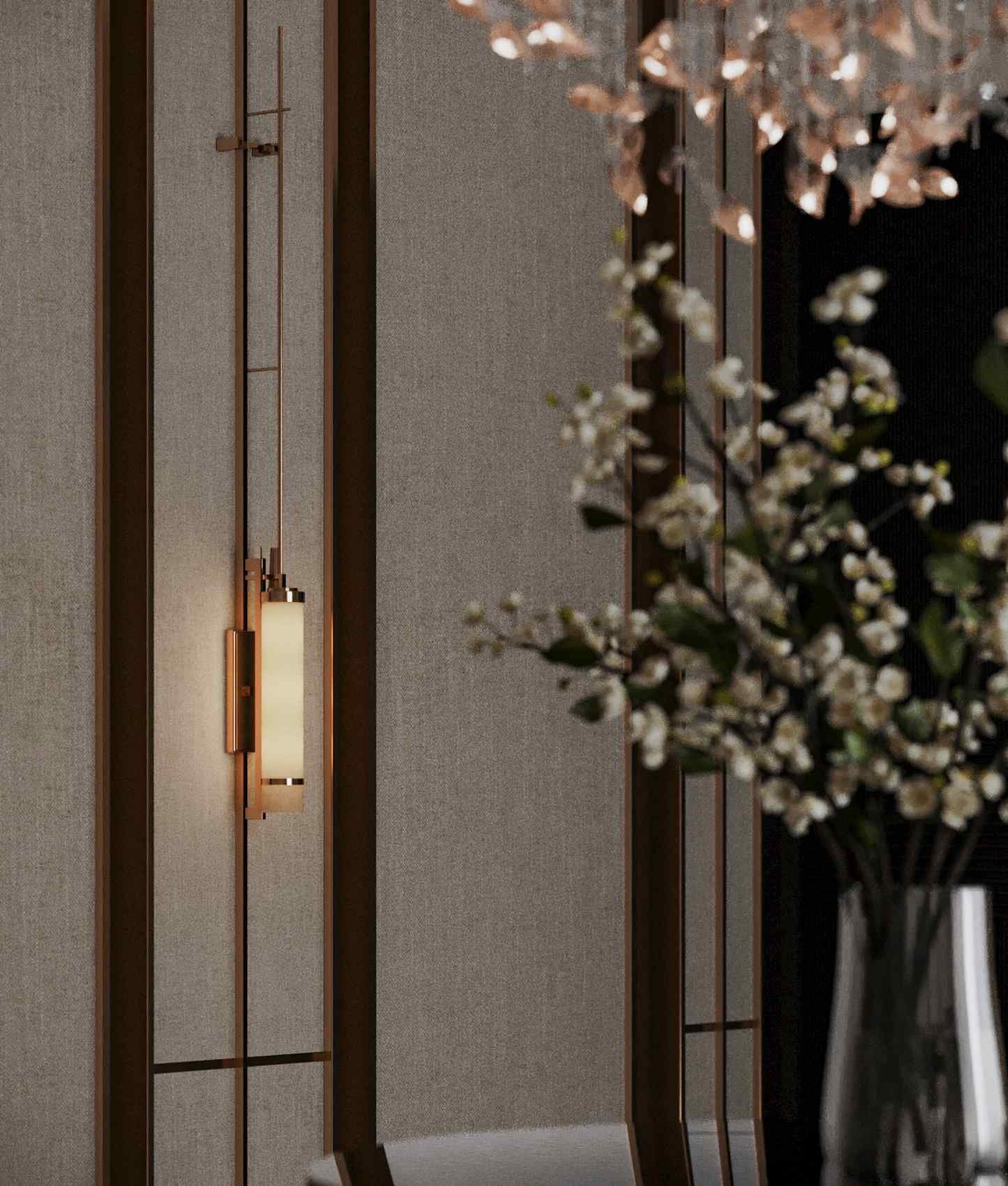
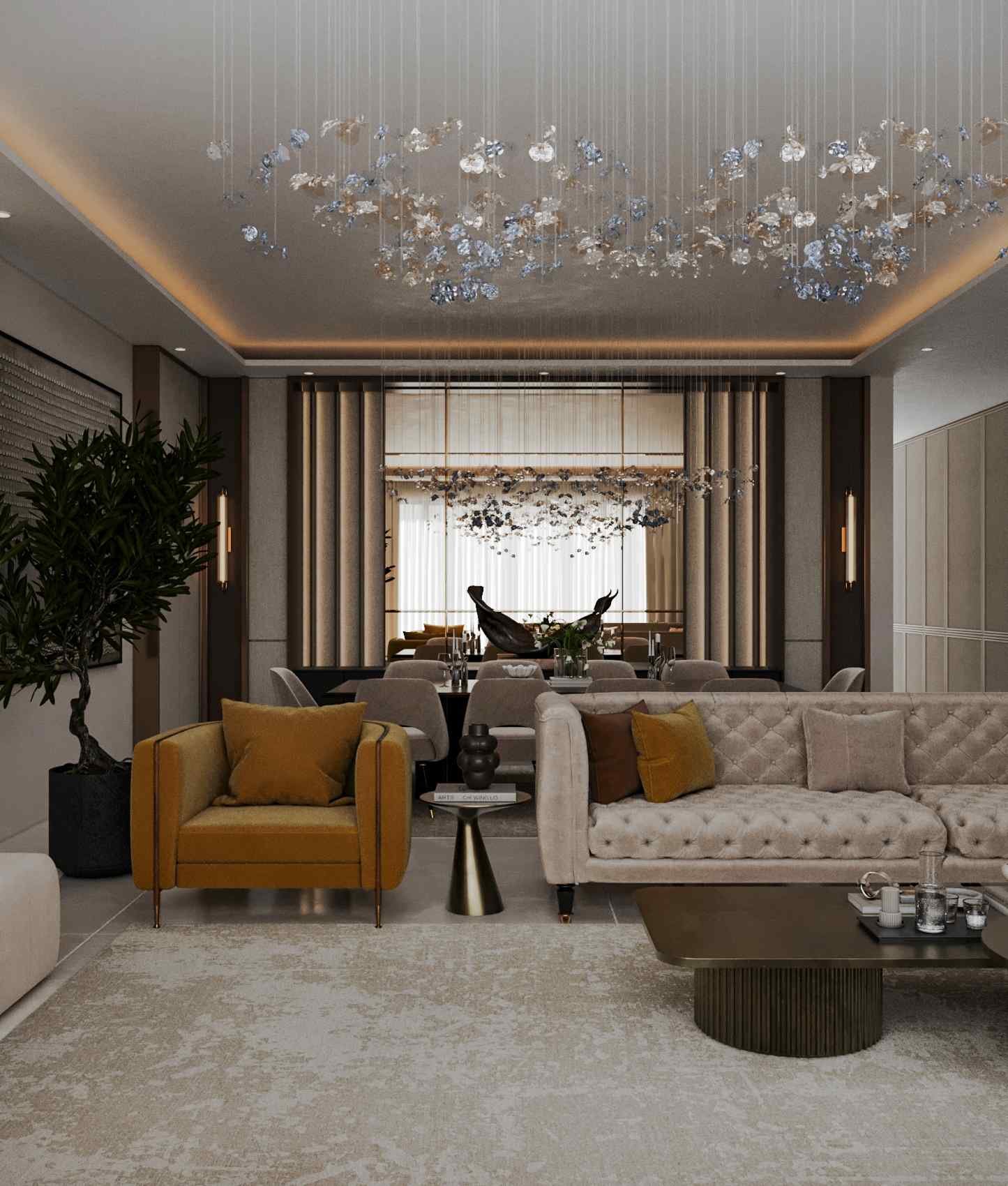
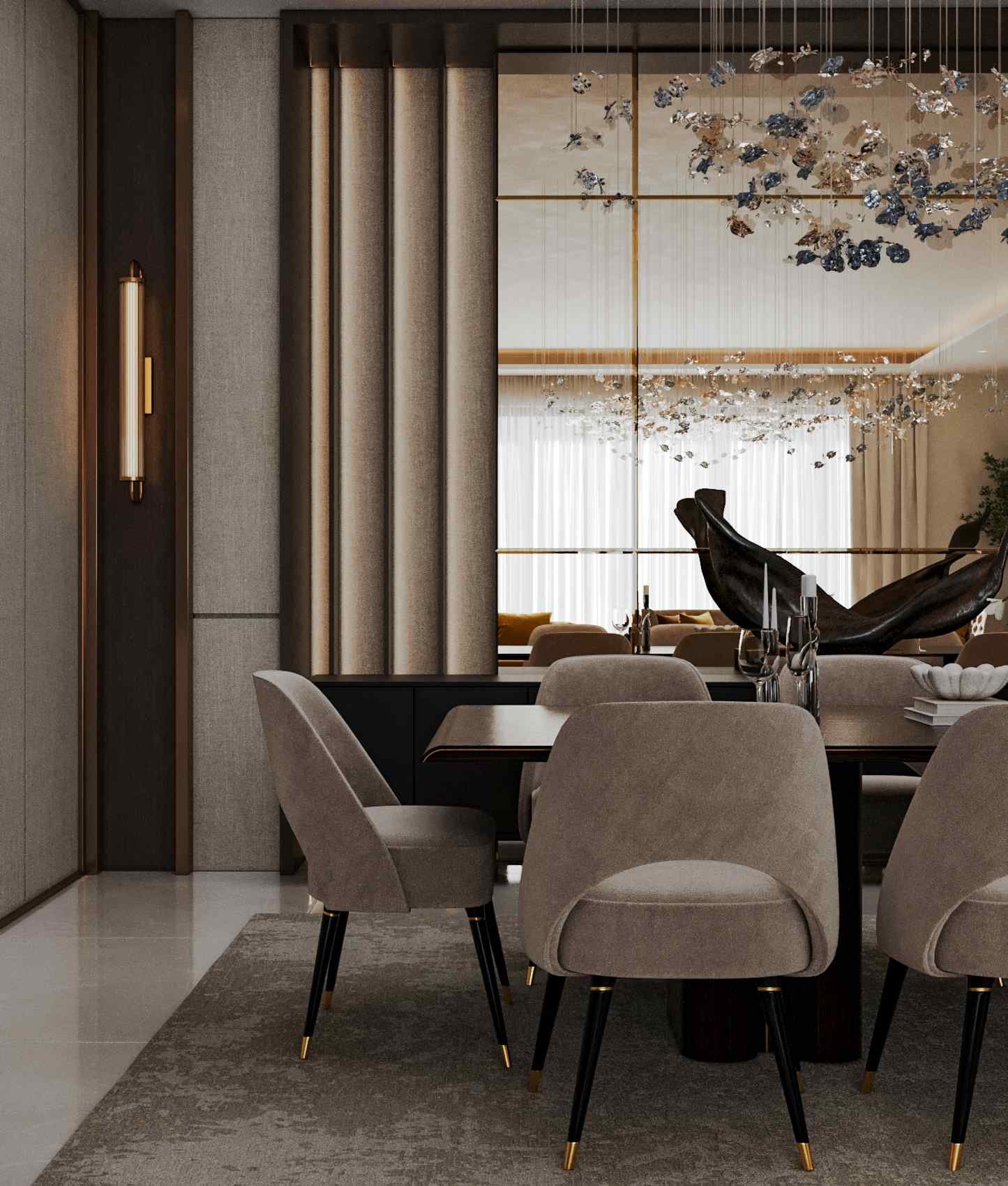
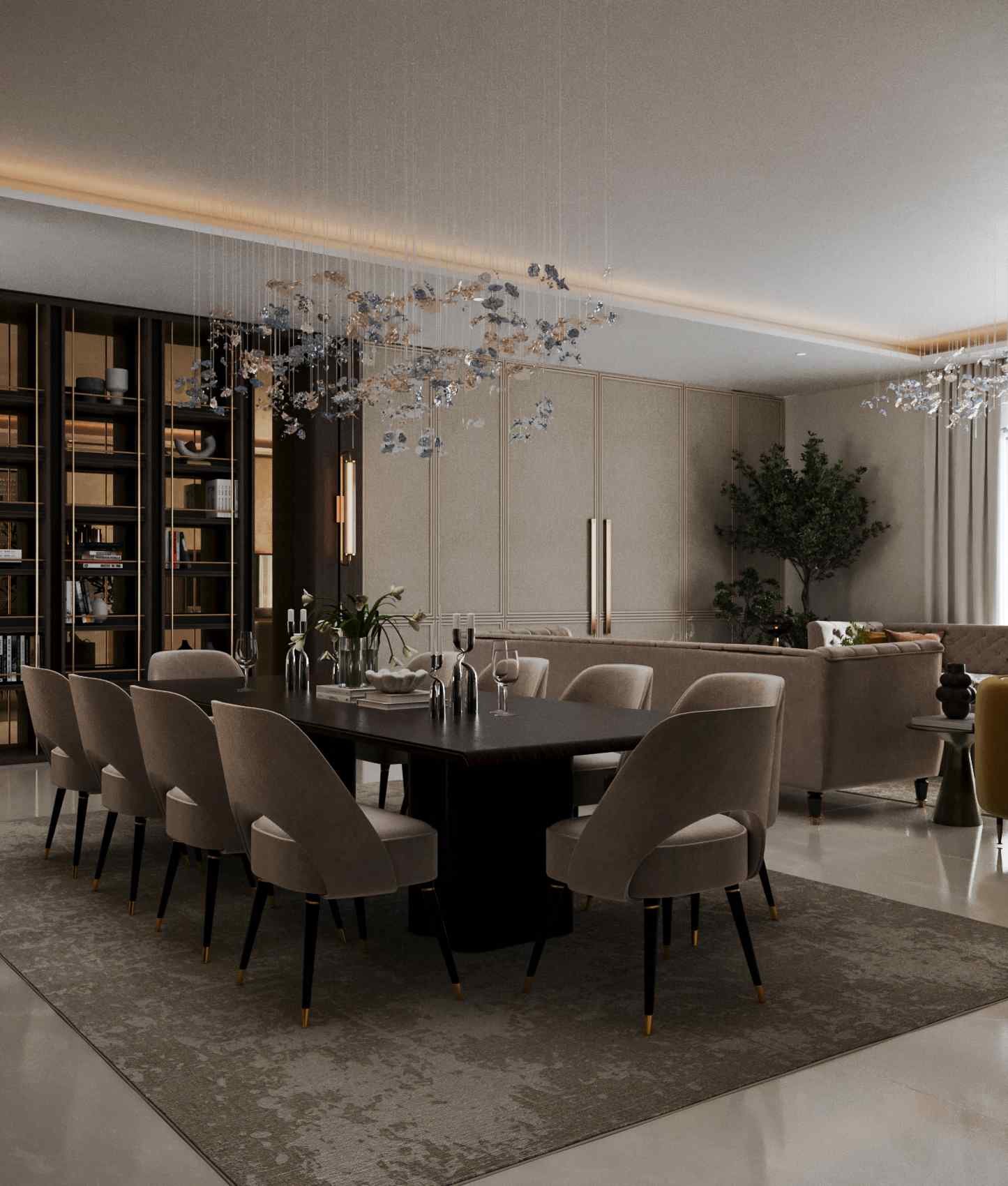
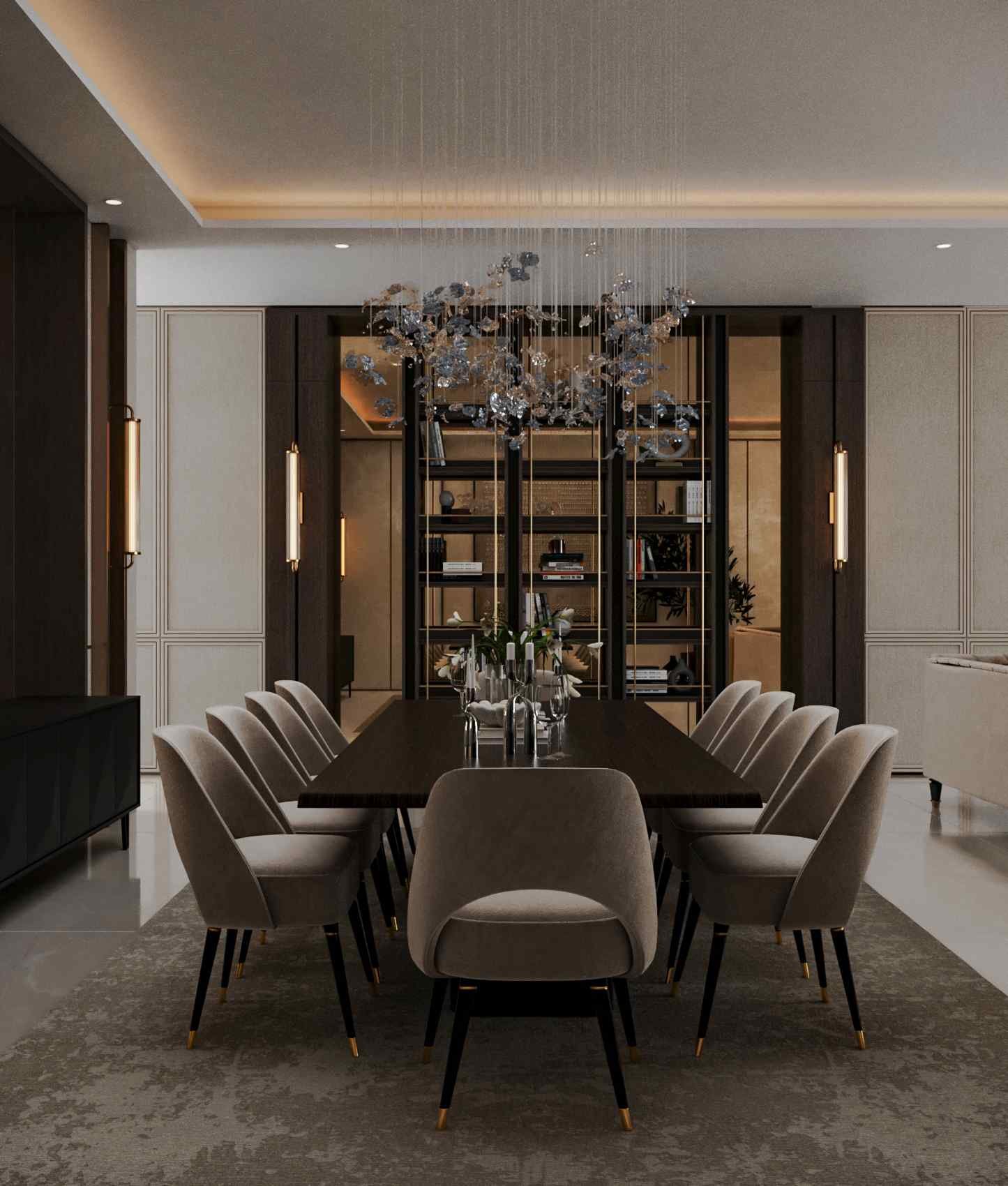
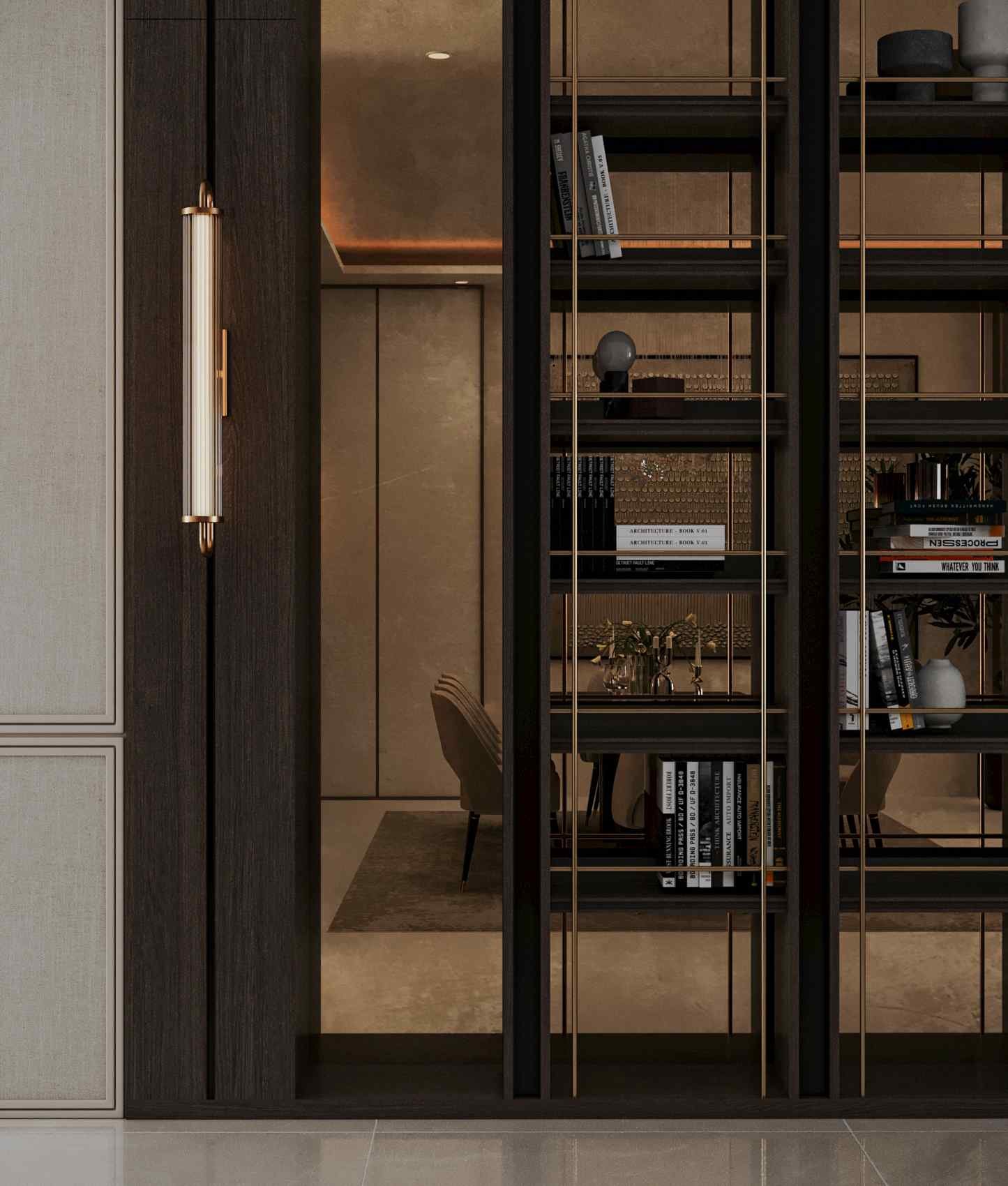
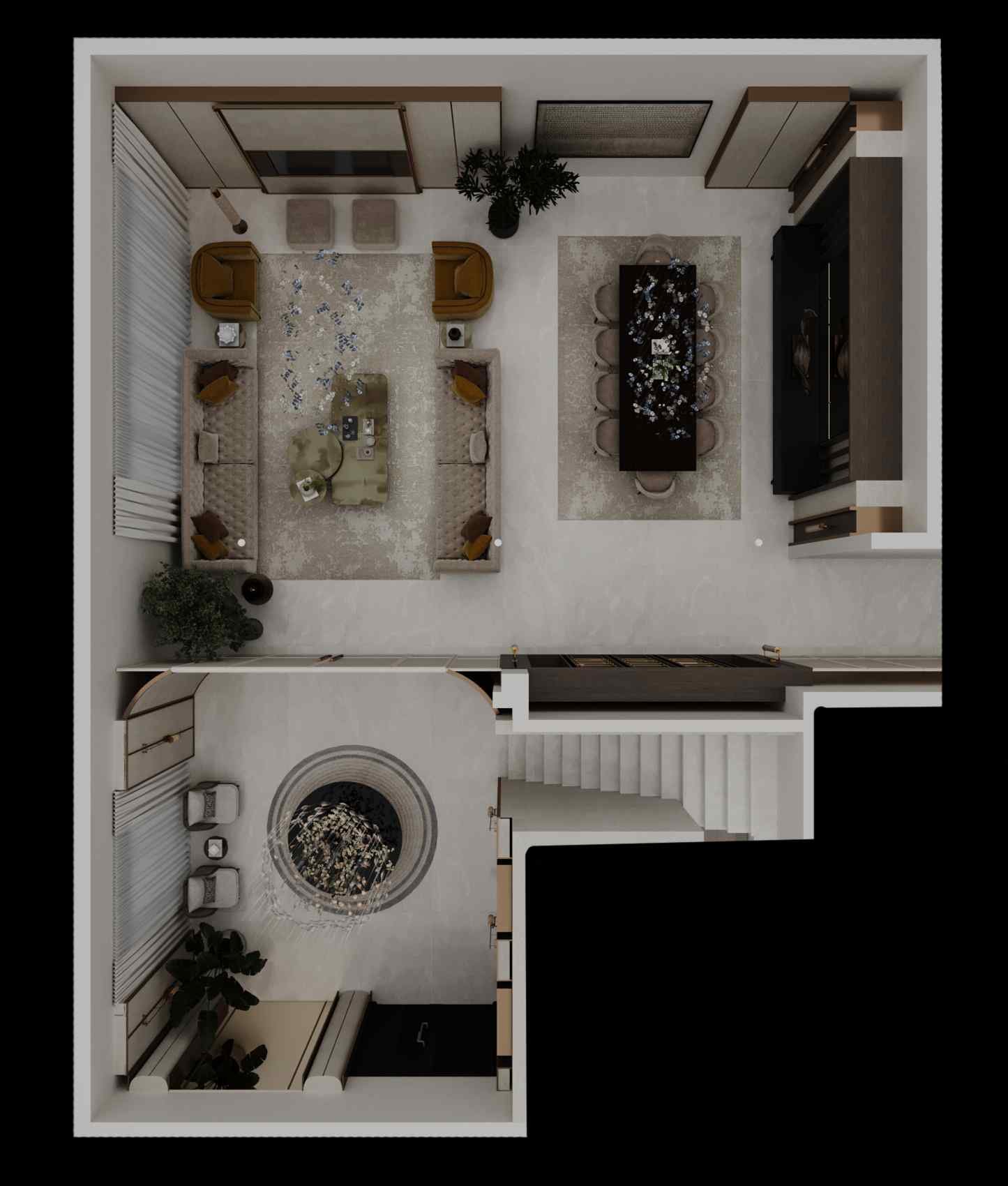
To resolve the privacy concern, a sliding partition system was introduced between the entrance
zone and the seating area. This architectural intervention creates a flexible spatial filter that
subtly separates the two zones without compromising the openness of the space. The sliding
panels allow the majlis to maintain visual elegance while providing the necessary level of privacy
when required.
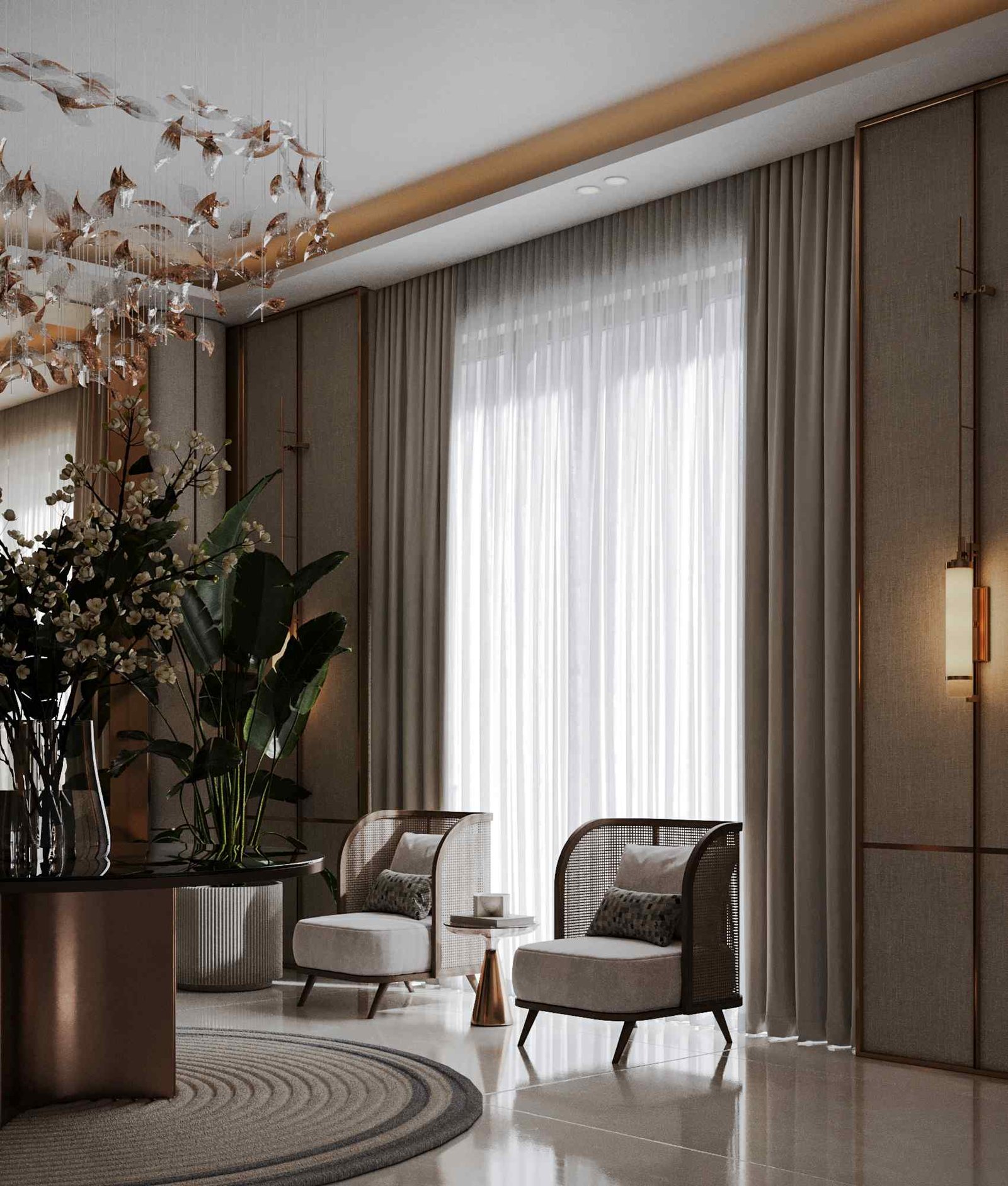
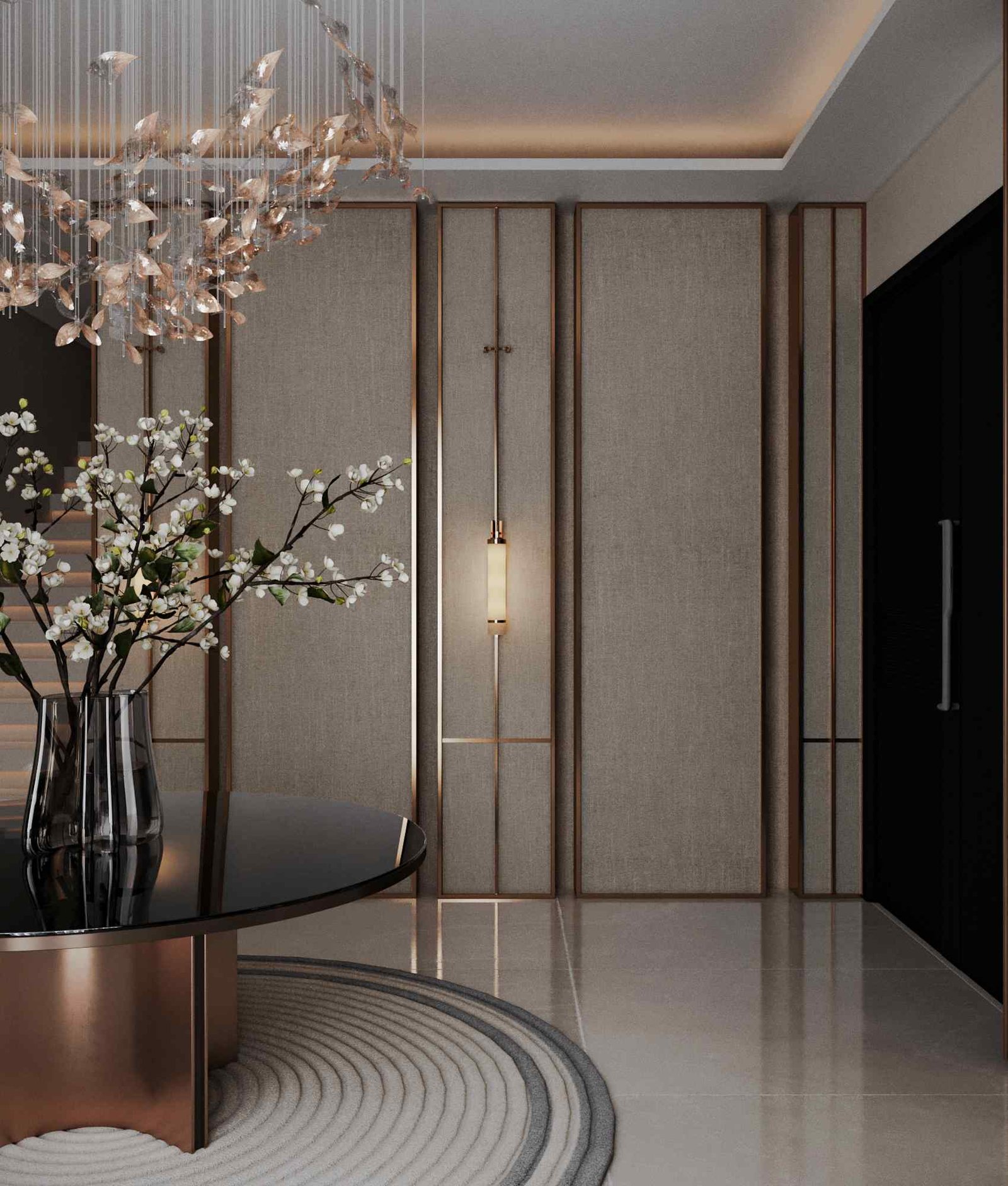
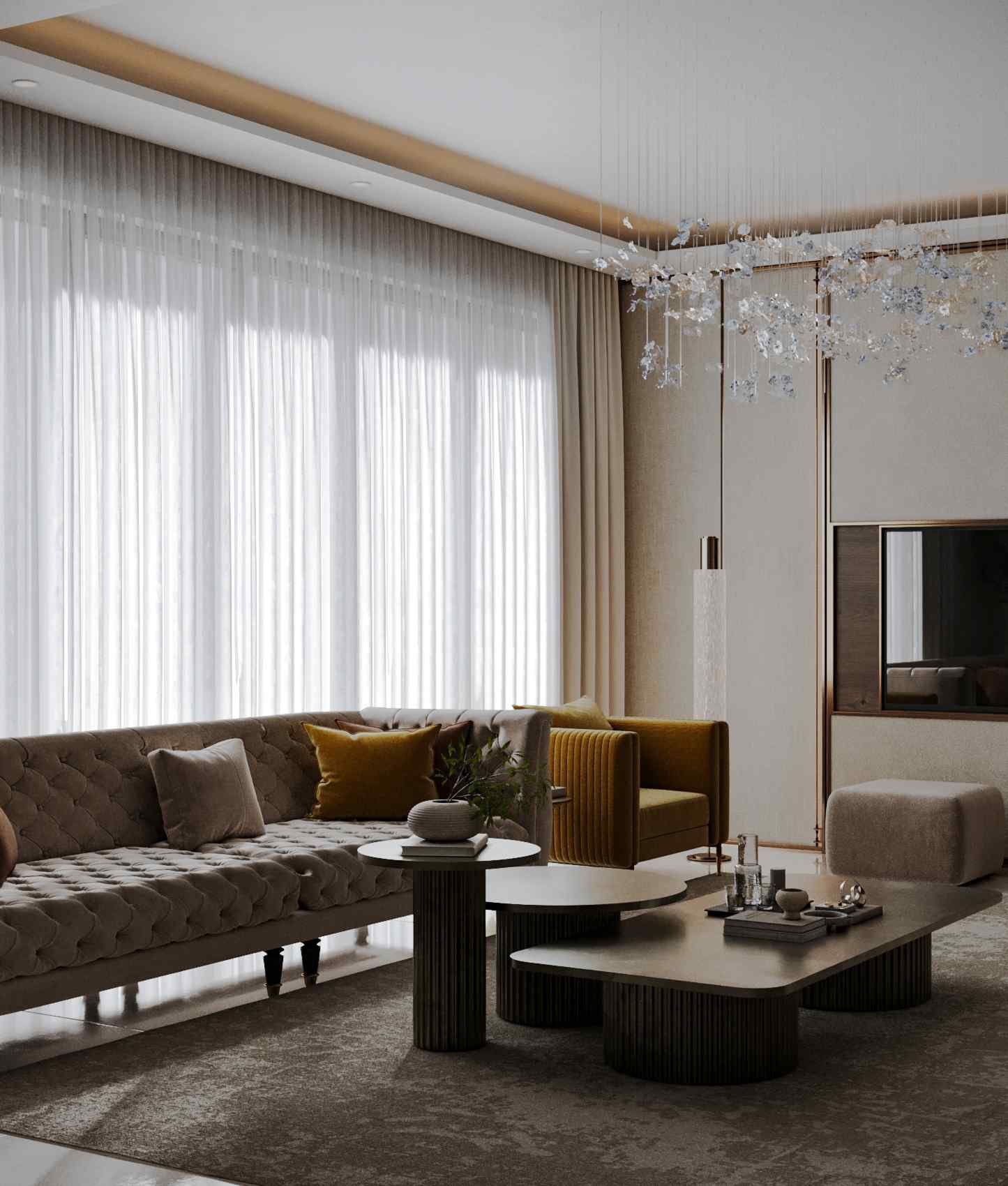
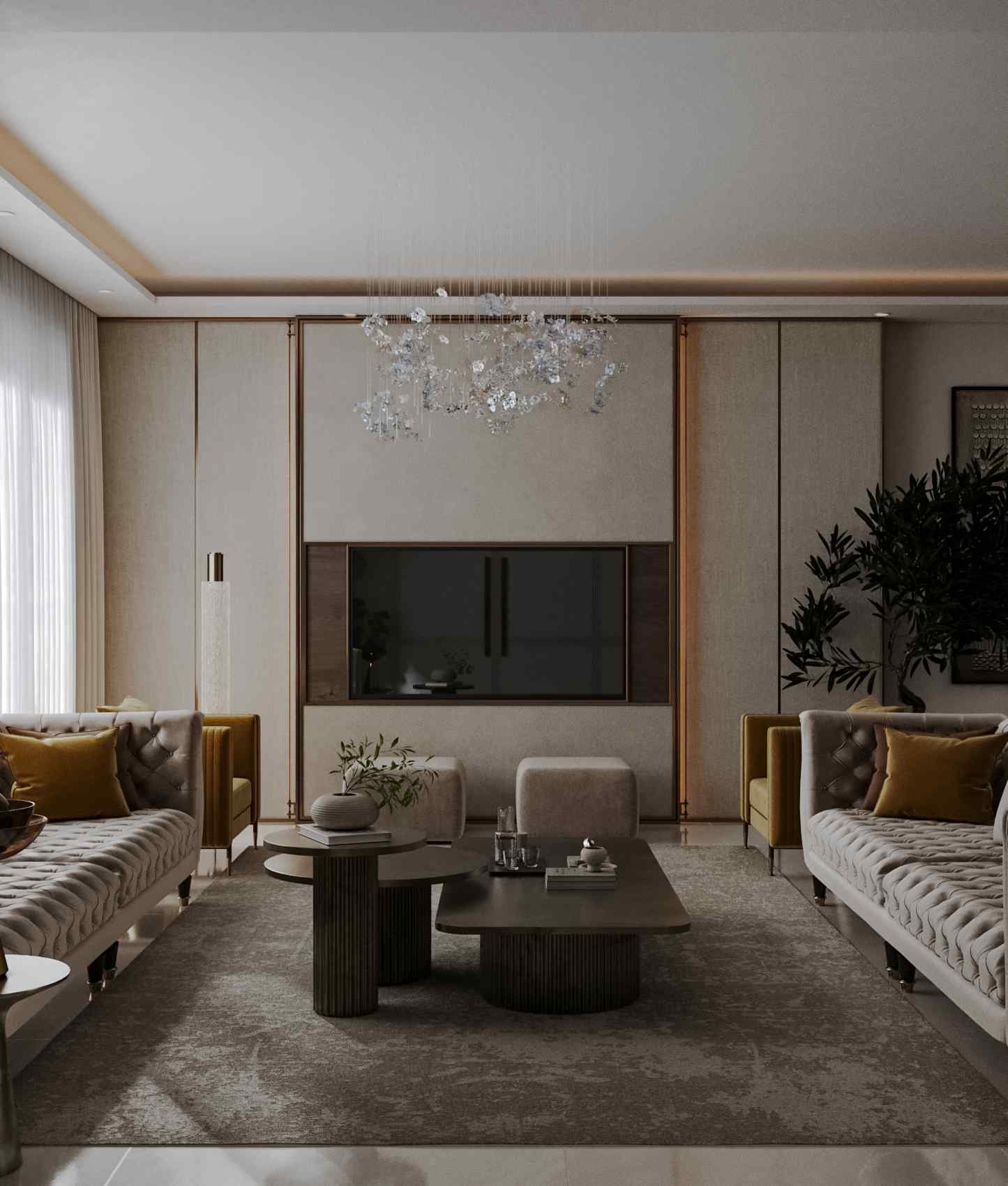
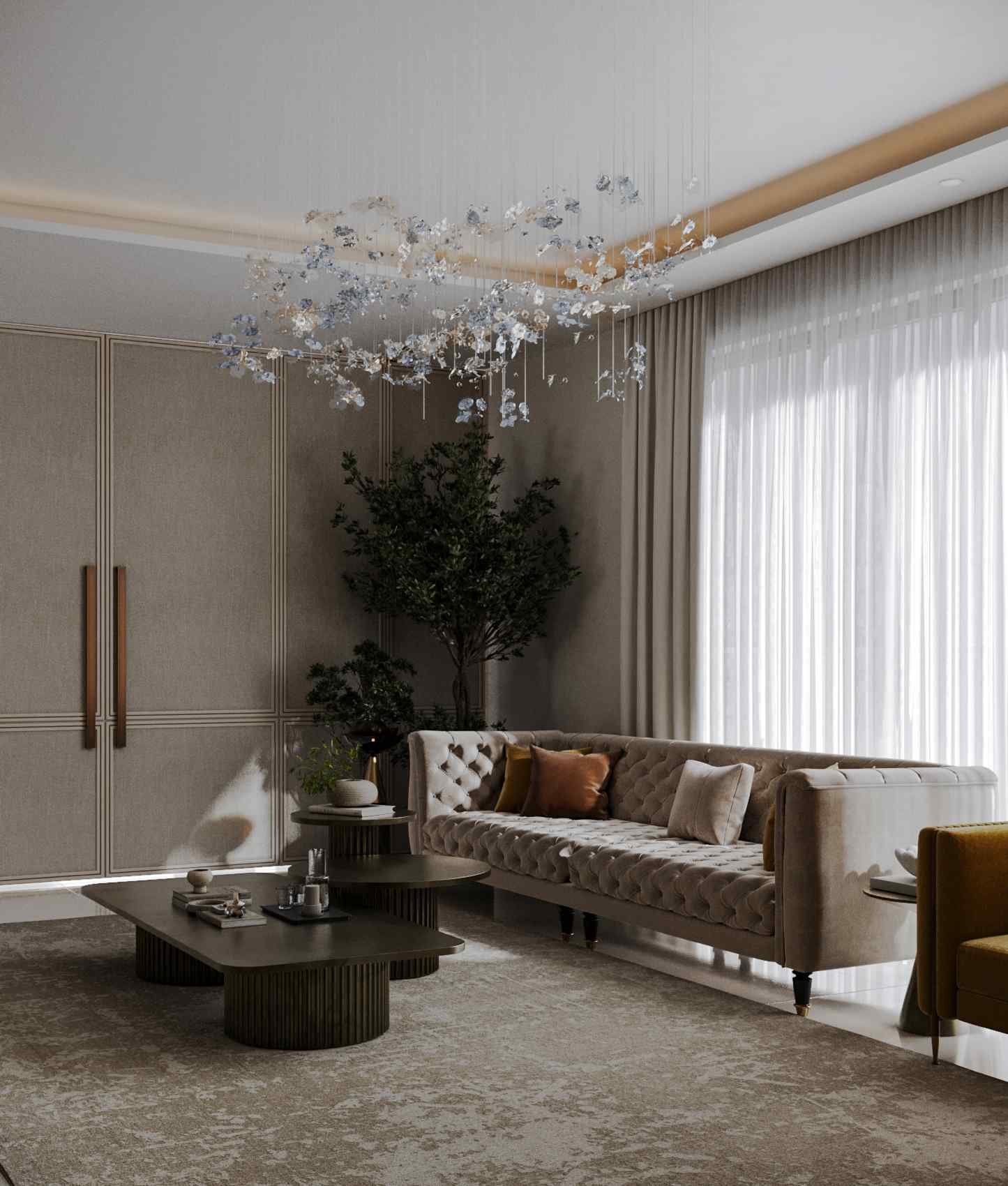
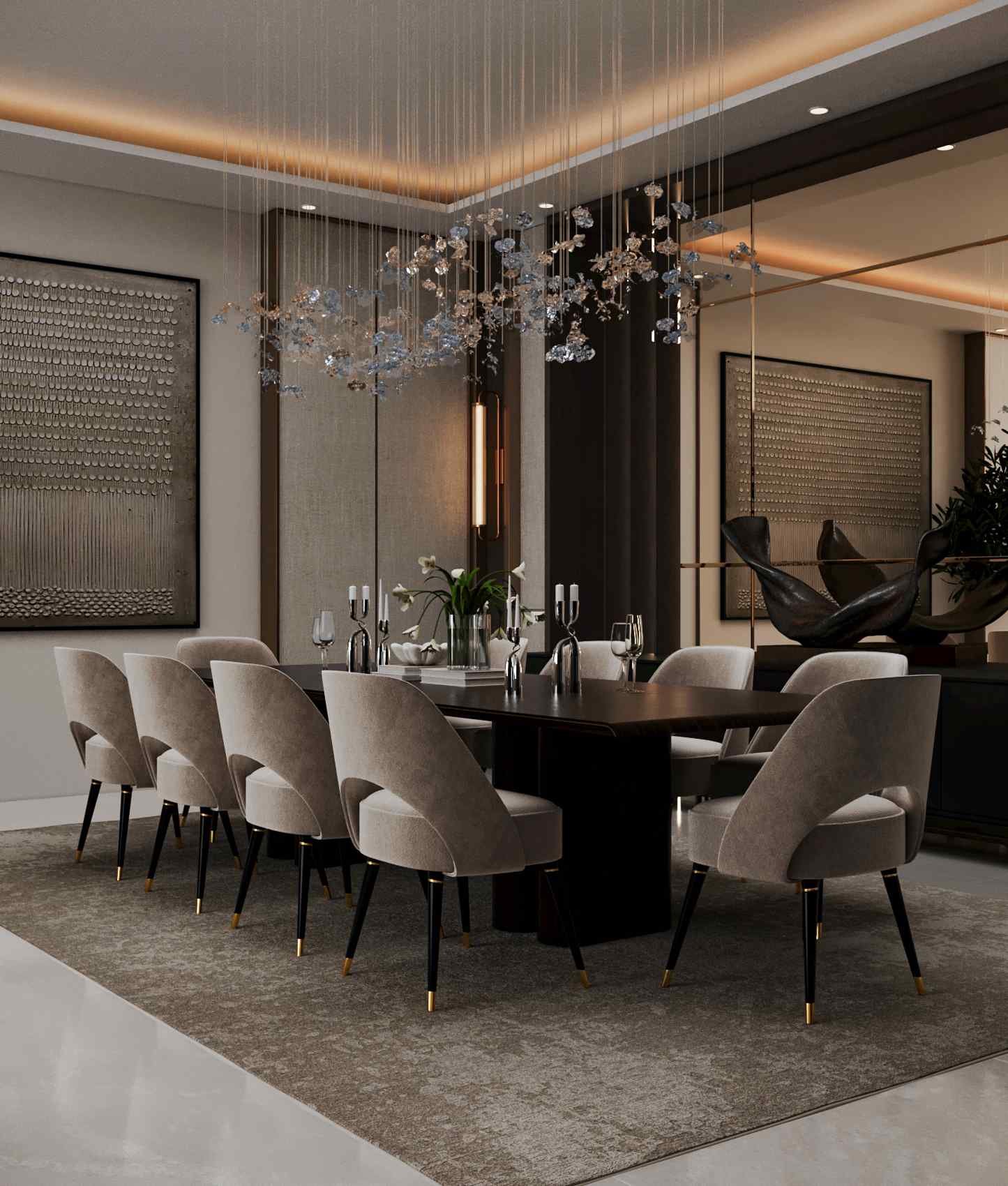
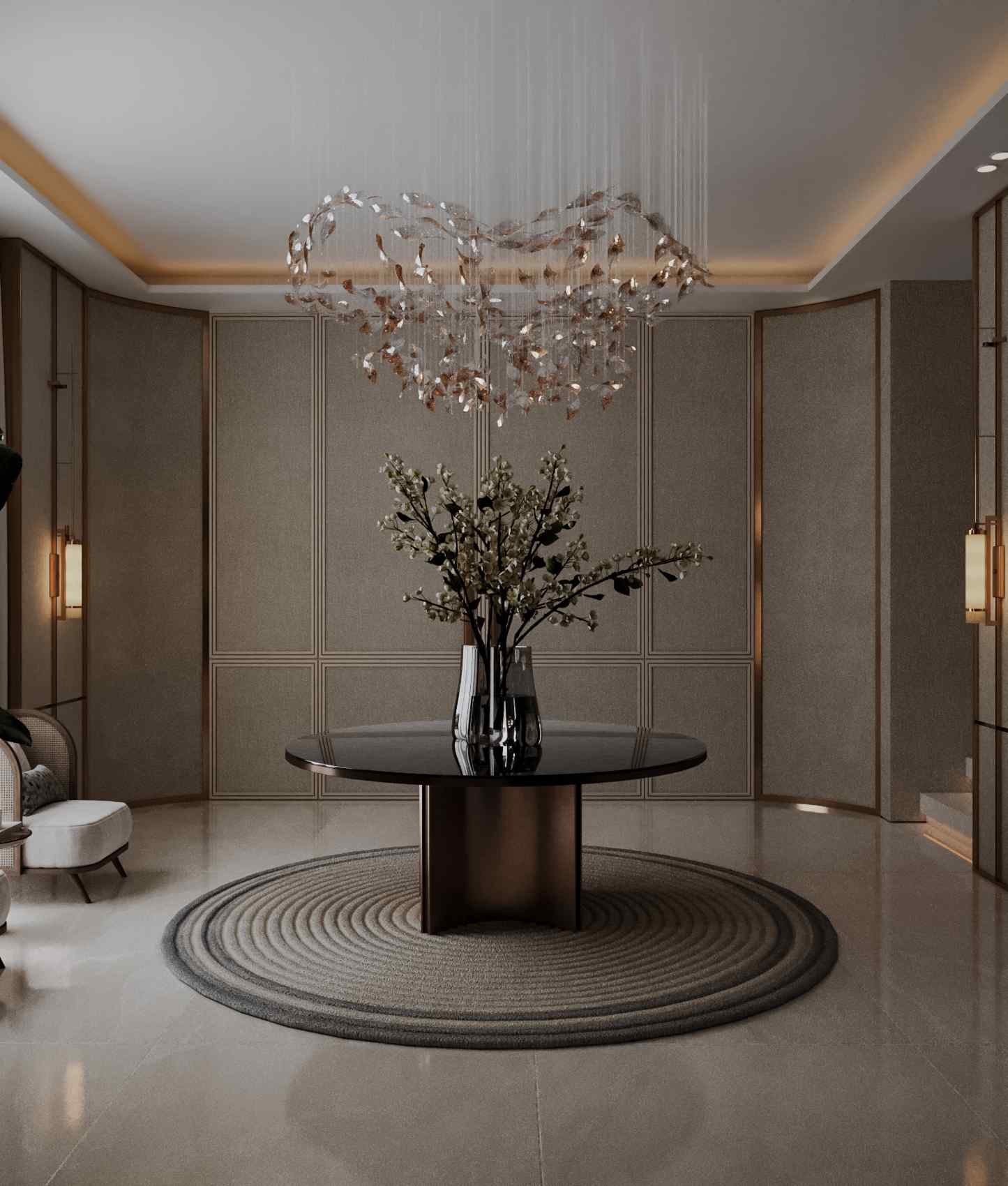
Beyond improving spatial privacy, the redesign also aimed to refine the furniture layout and
interior styling, ensuring that the majlis reflects the standards of a refined and welcoming
reception space. The result is an interior that balances functionality, cultural sensitivity, and
aesthetic harmony, creating a majlis that both respects the traditions of Arab hospitality and
enhances the comfort of the residents.
Through this intervention, the space was transformed into a more private, elegant, and
culturally responsive environment, offering a dignified setting for receiving guests and hosting
social gatherings.
district in the United Arab Emirates. The villa was already completed and fully occupied by the
family when the redesign request was initiated. The client’s primary objective was to enhance the
functionality, privacy, and overall aesthetic quality of the majlis while maintaining harmony with
the existing architecture of the house.
Upon analyzing the spatial layout, one of the main challenges became immediately apparent. The
original plan lacked a visual and spatial transition between the main entrance of the villa and the
majlis seating area. As a result, when the entrance door was opened, guests seated inside the
majlis had a direct visual connection with the exterior courtyard, which significantly reduced the
level of privacy within the space.
In residential environments rooted in Arab cultural traditions, privacy and respectful spatial
hierarchy are essential components of the architectural experience. Therefore, the redesign
strategy focused on addressing this issue while simultaneously elevating the interior character of
the majlis through carefully considered furniture arrangements and decorative elements.
To resolve the privacy concern, a sliding partition system was introduced between the entrance
zone and the seating area. This architectural intervention creates a flexible spatial filter that
subtly separates the two zones without compromising the openness of the space. The sliding
panels allow the majlis to maintain visual elegance while providing the necessary level of privacy
when required.
Beyond improving spatial privacy, the redesign also aimed to refine the furniture layout and
interior styling, ensuring that the majlis reflects the standards of a refined and welcoming
reception space. The result is an interior that balances functionality, cultural sensitivity, and
aesthetic harmony, creating a majlis that both respects the traditions of Arab hospitality and
enhances the comfort of the residents.
Through this intervention, the space was transformed into a more private, elegant, and
culturally responsive environment, offering a dignified setting for receiving guests and hosting
social gatherings.
Gallery
Visual Narrative
Majlis Redesign Images